Monday, 6 November 2017

A Curious Mind by Brian Grazer and Charles Fishman


All quotes from Brian & Charles’ book


Curiosity presumes that there might be something new out there.


The only way to persevere is to have the capacity to calmly separate yourself from what is being done to you.


Manners are really the basis for how we treat other people – manners are born out of compassion, empathy, the “golden rule”.  Manners are, quite simply, making people feel welcome, comfortable, and respected.  Etiquette is the set of techniques you use to have great manners.


Manners are the way you want to behave, and the way you want to make people feel. Etiquette is the granularization of the desire to treat people with grace and warmth.


In every case, the curiosity is all about the story.


In the last decade of his life, Asimov wrote fifteen or more books a year.  He was writing books faster than most people can read them.


Curiosity rewards persistence.


Persistence without curiosity may mean you chase a goal that isn’t worthy of the effort – or you chase a goal without adjusting as you learn new information.  You end up way off course.  Persistence is the drive moving you forward.  Curiosity provides the navigation.


I feel like we enter the world, newborn, and at the moment, the answer is “yes”.  And it’s “yes” for a little while after that.  The world is openhearted to us.  But at some point, the world starts saying “no”, and the sooner you start practicing ways of getting around “no”, the better.


Curiosity is power for real people.


True love requires curiosity, and sustaining that love requires sustaining your curiosity.


To get at the possibilities, you have to find out what ideas and reactions are in other people’s minds.  You have to ask them questions.


Curiosity is what creates empathy.  To care about someone, you have to wonder about them.


Familiarity is the enemy of curiosity.


How many marriages that drift into disconnection and boredom could be helped by the revival of genuine curiosity on both sides?  We need these daily reminders that although I live with this person, I don’t actually know her today – unless I ask about her today.


Developing a sense of taste means exposing yourself to a wide range of something – a wide range of music, a wide range of art – and not just exposing yourself, but asking questions.


Curiosity equips us with the skills for openhearted, openminded exploration.


Life isn’t about finding the answers, it’s about asking the questions.


Curiosity is hiding… almost everywhere you look – it’s presence or its absence proving to be the magic ingredient in a whole range of surprising places.


For it to be effective, curiosity has to be harnessed to at least two other key traits.  First, the ability to pay attention to the answers to your questions – you have to actually absorb whatever it is you’re being curious about…. The second trait is the willingness to act.


Curiosity starts out as an impulse, an urge, but it pops out into the world as something more active, more searching: a question.


Curiosity isn’t really celebrated and cultivated, it isn’t protected and encouraged.  It’s not just that curiosity is inconvenient.  Curiosity can be dangerous. Curiosity isn’t just impertinent, it’s insurgent. It’s revolutionary.


Curiosity isn’t just a great tool for improving your own life and happiness, your ability to win a great job or a great spouse.  It is the key to the things we say we value most in the modern world: independence, self-determination, self-government, self-improvement.  Curiosity is the path to freedom itself.


The ability to ask any question embodies two things: the freedom to go chase the answer, and the ability to challenge authority.


We need to be careful, individually, that the Internet doesn’t anesthetize us instead of inspire us.


There are two things you can’t find on the Internet… you can’t search for the answer to questions that haven’t been asked yet.  And you can’t google for a new idea.  The Internet can only tell us what we already know.


We are all trapped in our own way of thinking, trapped in our own way of relating to people. We get so used to seeing the world our way that we come to think that the world is the way we see it.


Being able to imagine the perspective of others is also a critical strategic tool for managing reality.


Successful business people imagine themselves in their customers’ shoes. Like coaches or generals, they also imagine what their rivals are up to, so they can be ready for the competition.


Curiosity is the tool that sparks creativity.  Curiosity is the technique that gets to innovation.


Questions create a mind-set of innovation and creativity.

Sunday, 5 November 2017

Small Data by Martin Lindstrom


All quotes from Martin’s book


Desire is always linked to a story, and to a gap that needs to be filled:  a yearning that intrudes, agitates and motivates human behavior both consciously and unconsciously.


We desire whatever it is – the peace, the person, the thing, the period in our lives – we’re convinced we’re lacking.


Are we aware of the haphazard sequence of small data we leave behind us every day – the rituals, habits, gestures and preferences that coalesce to expose who we really are inside?


No matter how insignificant it may first appear, everything in life tells a story.  


When people cry, it creates a “bookmark” in their brains ---- it is a moment, or experience, they are unlikely to forget.


When you surrender to apprehension, or worry, or nerves, you effectively place a filter over your senses and are no longer able to see what’s right in front of you.


Ironically, our insistence on being happy all the time almost guarantees unhappiness, if only by creating the fear that you’re not measuring up to other people’s levels of contentment, wealth or well-being.


The Twin Self has two elements, both of which are linked to desire: what we had once, but lost, and what we dreamed about having but never possessed.


If you want to understand how animals live, you don’t go to the zoo, you go to the jungle. 

Saturday, 4 November 2017

What God Said by Neale Donald Walsch


All quotes from Neale's book


Faith is not about wondering whether something will occur, or thinking it could happen, it is about feeling sure that it will happen.  This is a quantum leap from wishing.


When engaging specifically in the process of personal creation… try to consciously invoke the energy of “I know”, giving yourself permission to become less and less requiring of particular outcomes and more and more relaxed around whatever outcomes may occur.


Folks believe that if they “have” a thing (more time, money, love – whatever), then they can finally “do” a thing (write a book, take up a hobby, go on vacation, buy a home, enter a relationship), thus allowing them to “be” a thing (happy, peaceful, content, or in love).


First you must “be” the thing called “happy” (or “peaceful”, or “content”, or “in love”, or whatever), then you start “doing” things from this place of beingness --- and soon you discover that what you are doing winds up bringing you the things you’ve always wanted to “have”.


The way to set [the] creative process… into motion is to look at what it is you want to “have”, ask yourself what you think you would “be” if you “had” that, then go right straight to being.  Start there, rather than trying to get there.


How life works for you is very much a matter of what and how you are being.


It turns out that deciding ahead of time what you choose to be can often produce that in your experience.


Be who you really are…. It is a case of knowing that you are the source of these things, not the seeker of them.


Causing another to experience what you wish to experience makes you aware that you are the source, and not the seeker, of the experience…. Instead of trying to find what you want, you try to find ways to give away what you want.


If something occurs in your life that is unexpected, stop for just a moment and ask yourself, “How do I want to “be” with regard to this?” Then, step into the State of Being.


Life was designed as a process of creation, not a process of reaction.


The Universe cannot give you what you say it cannot.


Your energy either creates obstacles or opportunities.  You get to choose.


Life is meant to be happy, and most of the time there really should be no reason for it to be otherwise.


To live as whole human beings, to bring an end to the ongoing expression of our fractured selves, we would benefit as a species from working more diligently on what might seem to be a relatively simple task:  Just. Tell. The. Truth.


Unless we are willing to take full and complete, absolute and total responsibility for everything in our lives and for the experiences that we may have stimulated others to create in their lives, we cannot live a holistic life.  We can pretend to, we can act as if we are, but we cannot actually do it.  We must accept the fact that we are at cause in the matter of our lives.


All people are special, and all moments are golden.  There is no person and there is no time one more special than another.


Discomfort is nothing more than an announcement that healing is about to take place.


Always, breakthrough occurs when breakdown threatens.


Your life has nothing to do with you.  It is about everyone whose life you touch, and how you touch it.


Understanding replaces the need for forgiveness.


The only reason you would call anything “unforgivable” is that you don’t understand how anyone could do such a thing.


When we understand why the robber robs, why the terrorist terrorizes, why the killer kills, we then take a giant step toward the place where Divinity dwells.


What of our spiritual journey?  Are we seeking to create the experience of Divinity in, through, and as us, or as we merely trying to make it from birth to death with the least amount of offense to God?


Life has no intention of ending.  Ever.  Therefore, when any expression or form of life is threatened, it immediately adapts itself, thus rendering its expression sustainable once again.


Our opportunity here is to become a conscious (rather than an unconscious) part of the formula before actively and intentionally creating functionality, adaptability, and sustainability, rather than simply witnessing the playing out of this formula without our intervention or participation of any kind.  All intelligent, highly evolved species understand this perfectly.


Decide to pray, decide to meditate, decide to shift your ground of being at every level, to expand your spiritual experience and your spiritual expression…. In all of this, pay attention to what you’re doing, pay attention to what we’re being, pay attention to what you’re having in these days and times of your life.


The idea of Deity is something we have to appease in order to keep It on our side as a primitive notion arising out of the earliest thought of the earliest human beings on the planet:  that God is just like us, and since we need to be appeased in order to find another pleasing, so must God.


Death does not exist.  What you call “death” is merely a process of Re-Identification.


Life functions within a Be-Do-Have paradigm.  Most people have this backward.  Imagining that first one must “have” things in order to “do” things, thus to “be” what they wish to be.  Reversing the process is the fastest way to experience mastery in living.


Let there be a New Gospel for all the people of Earth: “We are all one.  Ours is not a better way, ours is merely another way".


What is needed now on Earth is a Civil Rights Movement of the soul, freeing humanity at last from oppression of its belief in a violent, angry, and vindictive God, and releasing our species from a spiritual doctrine that has created nothing but separation, fear, and dysfunction around the world.


Nothing blocks the creation and sustaining the peace in our world more than thoughts of superiority – especially if they are accompanied by righteousness.


It is so sad that we don’t even notice that we are creating the polarity ourselves, with our righteousness.


Remember, feelings are not a point of view.


Only when we are open to all ideas are all possibilities open to us.


What we call “hot” and what we call “cold” are not the “opposite” of each other --- that is, they are not two different things – but merely degrees of the Same Thing, which is something we call temperature.  In exactly the same way, God is the One Thing that Is --- expresses itself in varying degrees by dividing Itself into parts that are smaller than the whole.


All of us live not only many lifetimes (a process that is often referred to as reincarnation) , but we can also live the lifetime we are now experiencing more than once.

Friday, 3 November 2017

Wild Mind by Bill Plotkin


All quotes from Bill's book


We're being summoned by the world itself to make many urgent changes to the human project, but most central is a fundamental re-visioning and reshaping of ourselves, a shift in consciousness.


There's been insufficient tending to the process of becoming fully human.


When we eliminate symptoms without cultivating wholeness, we still have an unwell, unwhole, or fragmented psyche that will soon enough sprout new symptoms that express, in yet another way, the lack of wholeness.


The goal of individuation is wholeness, not perfection.


On the path to cultivating special equanimity, universal compassion, self-transcendence, and nondual awareness, there are a variety of challenges, distractions, and pitfalls.  In order to stay on the path, we need a well-developed capacity to nurture ourselves in the face of sometimes overwhelming emotions and memories, interpersonal  antagonism and discord, the boredom that can accompany contemplative practices, or our own wounded subpersonalities screaming for their needs to be met or their addictions to be fed.


Innocence implies and requires present-centeredness and receptivity - being here now, fully and simply, in relationship to each thing wholly in the way it is sensed and felt in the moment.... Innocence is the foundation of our ability to be in relationship and to cooperate, and cooperation is essential to life-enhancing societies.


Your potential for creating meaning in your life, for discerning your way toward your destiny, depends utterly on your capacity to be fully present with the chaos. 


At some point, before true healing is possible, we must be able to see how our demons are actually our partners in the individuation process, how they hold the missing segments of our path to wholeness.


Our juvenile survival strategies of self-diminishment form the core of our most self-defeating patterns: those that disparage our dreams, our potentials, and our healthy wildness, or that aggravate low self-esteem and troubles with intimacy.  And, most irksome, these strategies are often on automatic pilot, launched outside our awareness and without our consent or control.


Rescuing is common in egocentric society.  In one version, a person serves others with the hidden agenda of carving out a place of acceptance and belonging for herself, a place  where she'll be safe from abandonment. She accomplishes this by making herself indispensable.


Your belief in the story you've been living, no matter how wholesome of fulfilling, must erode before you're able to glimpse the larger and deeper story of soul.


Our psychological wounds provide portals into the very depths of our psyches.  Our wounds are not merely -- or even primarily - things to heal and overcome.  They're also, when we're developmentally prepared, something to re-open, explore, learn from, and be transformed by.


Managed emotions are not digested emotions, and emotional digestion is what we need in order to continue developing psychologically.


The most precise definition of depression is a bad case of suppressed emotions, emotions that have been managed instead of being felt, digested, understood, assimilated, and acted on in a way that preserves and improves our relationships.


Attempting to suppress or discount an emotion by calling it irrational reveals a lack of self-compassion.


All emotions are based on nondeliberated appraisals of our circumstances.... Sometimes our appraisals are mistaken, but this doesn't render our emotions irrational?


We all have a core wound.  From a spiritual perspective, this isn't an accident, nor is it unfortunate.


The Shadow is whatever the Ego isn't.  The Shadow is what's true about who you really are, but you haven't a clue about it.


Your Shadow contains values, perspectives, and capacities needed to round out and compete your adult personality.  It contains personal powers you'll need when you befriend or wrestle with the inner and outer demons and angels encountered in the process of growing whole, and it  holds the powers you'll need in order to embody the singular Soul gift you carry for the world.


The resources warehoused in our Shadow are potent.  They can be used for good or for ill.   Our Shadow not only safeguards us from these powers but also defends our communities from the damage we're capable of inflicting before we possess the maturity and experience to employ these powers wisely.

Thursday, 2 November 2017

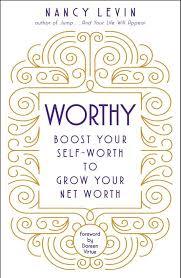
Worthy by Nancy Levin


All quotes from Nancy's book


The real way to creating financial freedom isn't about changing what you do.  It's about changing how you feel.


When we feel that we aren't enough, or that we aren't good enough, we also fear that we'll never have enough.  That fear is a self-fulfilling prophecy, in which we unconsciously make sure we never, ever have all that we need.  It's a painful arithmetic going on in the shadows of our unconscious.


Nobody likes guilty feelings, so we do whatever's necessary to avoid it -- even if it means turning a blind eye to how much we reject our own wants and needs.


With healthier self-worth, we take care of ourselves just as well as we take care of everybody else.


Many of us believe that sticking with the status quo will win us love and belonging.


Give up excuses for spending on things that aren't important.


Make a commitment to no longer shop as a way to avoid your feelings.


The amount of money we make and how we relate to money is a result of the beliefs we carry -- both our beliefs about money and our beliefs about our own self-worth.


The beliefs that develop during our formative years become like our operating system.  We can't perform functions that are outside of the system's abilities...not unless we reprogram the system itself.


Keeping ourselves down doesn't help other people avoid suffering.


Your body is the barometer of your truth.


Our excuses, like our beliefs, can easily sound like facts.  But also like beliefs, they aren't the truth.


Excuses are just well-packaged resistance. 


Whenever we choose to fight against or deny something that seems threatening, if we look under the hood, we'll find resistance… and under that will be self-worth issues.


When we tell ourselves, "I can't", what we're usually saying is "I won't".  Using "can't" allows us to pretend we have no choice but to give in to our excuses.


Try replacing your "I can't" with "I'm resistant to".  For example, "I'm resistant to trying to make it on my own".  "I'm resistant to spending money".  "I'm resistant to leaving my job". 


Our excuses are the way we reinforce our beliefs.  They're how we explain why we don't already have everything we say we want.  They're a form of self-sabotage because they give us permission not to try.


Excuses: they're self-imposed limitations that have nothing to do with reality.


To dissolve the cycle of excuses, the first step is to remember that there are always options and choices.


Underlying commitments cause us to take actions that lead us away from the direction of our dreams.  To get stuck in patterns that we can't seem to change no matter how hard we try.  To create results that are inconsistent with what we say we desire.  But the truth is that we're always getting what we're actually committed to -- our underlying, hidden commitments. 


We are always creating exactly the reality we're most committed to having.  It doesn't matter what we say we want.  If we don't have the thing we desire, it's because we're more committed to our present state than we are to getting what we want. 


With a strong sense of worthiness, we're much less likely to let "failures" get us down.  Instead, we see them as learning experiences that propel us forward to even better opportunities. 


Frequently, our "what ifs" are tied to what others will think about us.


Arrogance actually comes from a lack of self-worth.


When we seek validation from outside of ourselves, it's another sign of our desperation to feel we're worthy.


Reciprocity out of obligation is a habit directly related to low self-worth.


Taking responsibility for our finances is the corner stone of financial power.


A high quality life has more to do with what you subtract than what you add.


Movement mobilizes possibility, and change beings with making a different choice.


We choose our limits based on what we believe we're worthy of having.

Wednesday, 1 November 2017

Ocean of Dharma by Chӧgyam Rinpoche Trungpa


All quotes from Chogyam's book


Sacredness is like putting on a fur coat in the biting cold of winter.  Sacredness fulfills its purposes, and it also brings cheerfulness and goodness into the system so that we don’t pollute the world.


We should regard everything that we do as very important – not a big deal, but very important.


You can’t act on your desires alone.  you have to contemplate the details of what needs to be removed and what needs to be cultivated.


The more we seek security, the more insecurity that creates.


Dharma literally means “truth” or “norm”.  It is a particular way of thinking, a way of viewing the world, which is not a concept but experience.


We must drop all reference points, all concepts of what is or what should be.  Then it is possible to experience the uniqueness and vividness of phenomena directly.


Regularity in life is not the point; experience is the point.


In boredom you have no choice but to relate directly to what is happening to you.


Elegance means appreciating things as they are.


My ego is bothering me.  I feel very self-conscious about having to be me.  I feel that I have a tremendous burden in me, and I wonder what the best way to get rid of it is.  Yet all these expressions of restlessness that keep coming out of us are the expression of Buddha nature: the experience of our unborn, unobstructed, and nondwelling nature.


The idea of Buddha mind is not purely a concept or a theoretical, metaphysical idea.  It is something extremely real that we can experience ourselves.  In fact, it is the ego that feels that we have an ego.  It is ego that tells us.


The mind’s cunning tricks are endless; therefore one should develop one’s one way of freeing oneself from frivolousness.  Meditation provides an immediate opportunity to bring one’s neuroses to the surface, examine them, work with them, and recognize them as materials of the path rather than villains.


We are referring to a basic attitude of trust in the nonexistence of our being.  In the tantric notion of indestructability, there is no ground, no basic premise, and no particular philosophy except for one’s own experience, which is extremely powerful and dynamic.  It is a question of being rather than figuring out what to be or how to be.


We must be willing to be completely ordinary people.


We are attracted to our cocoons, our selfishness.


Enlightenment is the complete absence of any kind of promises.


The demand for relief or sanity that is contained in confusion is, in fact, the beginning point of Buddhism.


Chaos should be regarded as extremely good news.


Discovering fearlessness comes from working with the softness of the human heart.


You can actually survive beautifully by doing nothing.


Being willing to be a fool is one of the first wisdoms.


Whenever you need reassurance, that means you have a fixed idea of what ought to be.


Meditation is not purely sitting alone in a particular posture attending to simple processes, but it is also an openness to the environment in which these processes take place.  The environment becomes a reminder to us, continually giving us messages, teachings, insights.


What we do with the present situation as it relates to the future is completely up to us. It is an open situation.


For the warrior, renunciation is giving away, or not indulging in, pleasure for entertainment’s sake.  We are going to kick out any preoccupations provided by the miscellaneous babysitters in the phenomenal world.


When people say they are bored, often they mean that they don’t want to experience the sense of emptiness, which is also an expression of openness and vulnerability.


Seeing the sacred world is witnessing the greater vision, which is there all the time.


Becoming a warrior means that we can look directly at ourselves, see the nature of the cowardly mind, and step out of it.  We can trade the small-minded struggle for security for a much vaster vision.


True fearlessness is not the reduction of fear, but going beyond fear.


Chaos is the inspiration, confusion is the inspiration.


Enlightenment possibilities are all over the place.


Through the practice of meditation, we begin to find that within ourselves there is no fundamental complaint about anything or anyone at all.